To support the important consensus reached by the heads of state of China and Russia on the China-Russia Year of Education, expand NCUT’s international cooperation, and deepen educational exchanges with Russian institutions, Zhang Lifeng, President of NCUT, led a delegation to Russia from June 18 to 20. The delegation visited the Russian Academy of Sciences, the Baikov Institute of Metallurgy and Materials Science of the Russian Academy of Sciences, Lomonosov Moscow State University, and the National University of Science and Technology MISIS (NUST MISIS), opening a new phase of strategic cooperation with leading Russian universities and research institutes.
Visit to the Russian Academy of Sciences
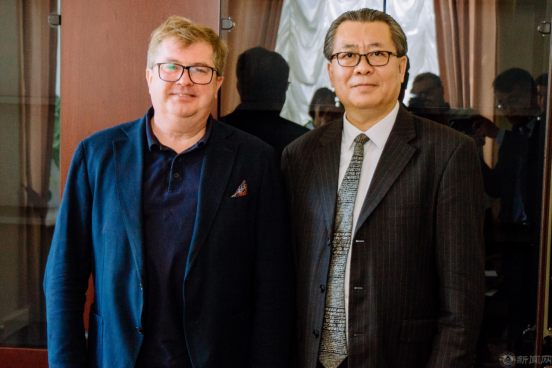
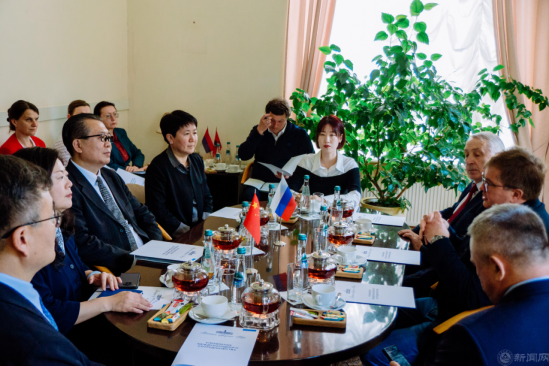
During the visit to the Russian Academy of Sciences, Zhang Lifeng and the delegation held talks with Academician Stepan Kalmykov, Member of the Presidium and Vice President of the Russian Academy of Sciences. Zhang introduced NCUT’s overall development, teaching and research, as well as its academic exchanges with the Baikov Institute of Metallurgy and Materials Science. Vice President Stepan Kalmykov spoke highly of Zhang Lifeng’s academic achievements in new metallurgical materials, clean steel production, and digital metallurgical processes, and expressed strong support for academic exchanges between relevant institutes and NCUT. The two sides held in-depth discussions on four key areas: joint development of national-level research platforms, regular China-Russia academic seminars, high-level exchanges between academicians and experts, and joint applications for international research projects.
The Russian Academy of Sciences, founded in Saint Petersburg in 1724 and headquartered in Moscow, is the highest academic institution and largest research organization in the Russian Federation. Its core mission is to advance fundamental research on the laws of nature and society. The Academy has three regional branches, 15 regional research centers, 13 divisions, and more than 500 research institutions, with around 55,000 staff members. It currently has 890 academicians, 1,135 corresponding members, and 466 foreign members, and is a member of the Alliance of International Science Organizations under the Belt and Road Initiative. Throughout its history, 19 of its academicians have received Nobel Prizes.
Visit to the Baikov Institute of Metallurgy and Materials Science, Russian Academy of Sciences
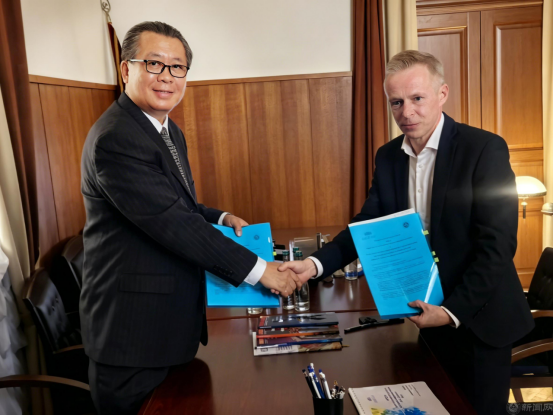
During the delegation’s visit to the Baikov Institute of Metallurgy and Materials Science, Russian Academy of Sciences, Director Vladimir Sergeevich Komlev, Corresponding Member and Doctor of Technical Sciences, and Academician Konstantin Grigorovich, Head of the Materials Testing Laboratory, met with the NCUT delegation. The two sides signed a memorandum of cooperation and exchange, formally establishing a friendly cooperative relationship.
At the meeting, Zhang Lifeng introduced NCUT’s overall profile, disciplinary strengths, research platforms, and academic exchanges with the Institute. Director Vladimir Sergeevich Komlev warmly welcomed the delegation and introduced the Institute’s development, research areas, academic influence, original research achievements, and academic cooperation with China. He also highly praised Zhang Lifeng’s academic lecture. The two sides reached consensus on strengthening academic exchange, scholar visits, applications for international cooperation projects, and the joint development of international research cooperation platforms.
The Baikov Institute of Metallurgy and Materials Science is a research institute under the Russian Academy of Sciences, located in Moscow. It focuses on the study of iron, ferrous and non-ferrous metal alloys, and materials science. The Institute has achieved a number of original research outcomes, internationally advanced patents, and academic publications in areas such as high-temperature physicochemical processes, melt and solid solution structures, metallurgical reaction kinetics, and the preparation of nanopowders and spherical metal particles. It is one of Russia’s and the world’s leading research institutes in the field.
Visit to NUST MISIS
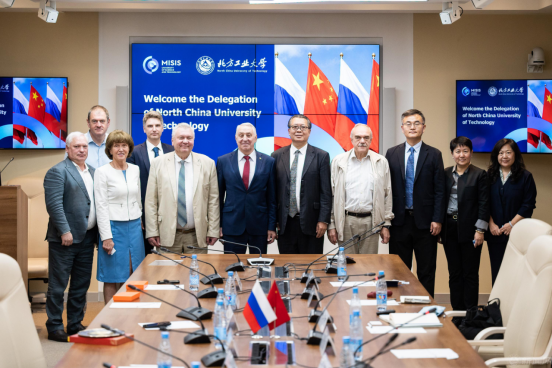
During the delegation’s visit to the National University of Science and Technology MISIS, Vice Rector for Science and Innovation Mikhail Rudolfovich Filonov, Head of International Affairs Dmitry Vitalyevich Vasiliev, and Director of the Information and Marketing Center Natalia Arianovna Korotchenko met with the NCUT delegation. The two universities signed an inter-university exchange agreement, formally establishing a friendly cooperative relationship.
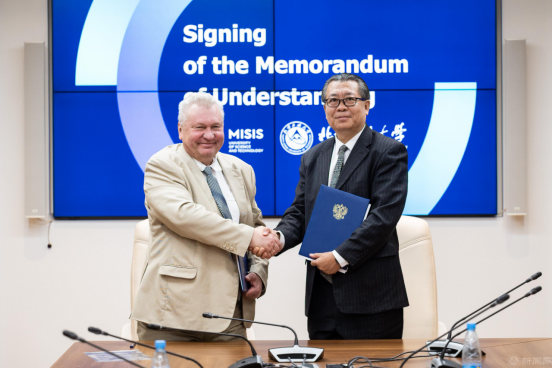
At the meeting, Vice Rector Mikhail Rudolfovich Filonov gave a comprehensive introduction to the university’s history, disciplinary structure, and overall development, with a focus on its internationalization strategy, overseas education layout, and development of overseas campuses. Zhang Lifeng introduced NCUT’s overall profile, talent cultivation, discipline development, achievements in international education, and educational exchanges with Russia. After thorough discussions, the two sides reached consensus on student joint cultivation, cooperation in new materials programs, academic exchange, and joint development of research platforms.
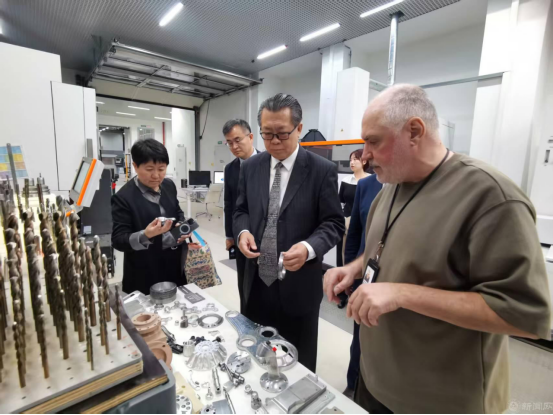
Before the meeting, the NCUT delegation visited the Center of High-Complexity Rapid Prototyping, the Hybrid Nanostructured Materials Research Laboratory, and the Structural Ceramic Nanomaterials Research Center. The visit further strengthened NCUT’s cooperation network with Russia’s leading universities in metallurgy and materials science, laying a solid foundation for future substantive cooperation and coordinated development in new materials.
NUST MISIS is Russia’s first public technological university to receive the title of “National Research Technological University.” Founded in 1918 and located at 4 Leninsky Prospekt in Moscow, the university is known for its strengths in materials science, metallurgy, and mining engineering, and is a leading technological university in Russia. It has three world-class engineering technology centers. In the 2024 QS World University Rankings, it was ranked 319th globally. The university has more than 27,000 students, 19 percent of whom are international students. It has nine institutes and six branches, offering 135 fields of study. Thirteen bachelor’s programs and six master’s programs have received EUR-ACE® accreditation. In subject rankings, its mining engineering and metallurgical engineering disciplines are among the world’s top 100, while materials science is ranked 101-150.
Visit to Lomonosov Moscow State University
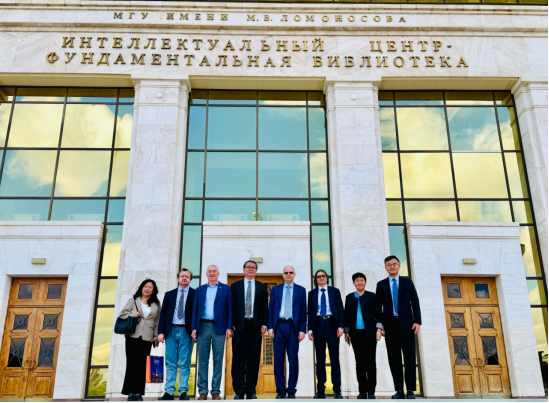
During the delegation’s visit to Lomonosov Moscow State University, NCUT held focused exchanges with its Faculty of Materials Science and Faculty of Chemistry. NCUT’s School of Mechanical and Materials Engineering signed a memorandum of cooperation with the Faculty of Materials Science, further strengthening the foundation for strategic cooperation between the two universities in materials science.
At the meeting, the two sides held detailed discussions on discipline development, frontier research, faculty exchange, and joint student cultivation, and reached several consensuses on future practical cooperation. The signing of the agreement established a long-term and stable exchange platform for materials science between the two universities. Moving forward, both sides will build on their respective research strengths to advance joint research projects, faculty and student exchanges, and joint graduate education.
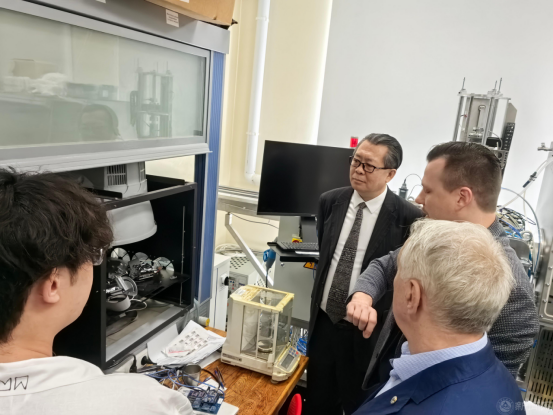
The NCUT delegation also visited the Laboratory of New Materials for Solar Energy at the Faculty of Chemistry. The laboratory focuses on the research and development of perovskite tandem solar cells and has full-process capabilities in thin-film preparation, encapsulation, and testing. Equipped with internationally advanced research facilities, it is able to simulate complex environments, including terrestrial and space conditions. The laboratory also has a range of self-developed equipment with a high level of digitalization and automation, providing useful reference for the development of related laboratories at NCUT.
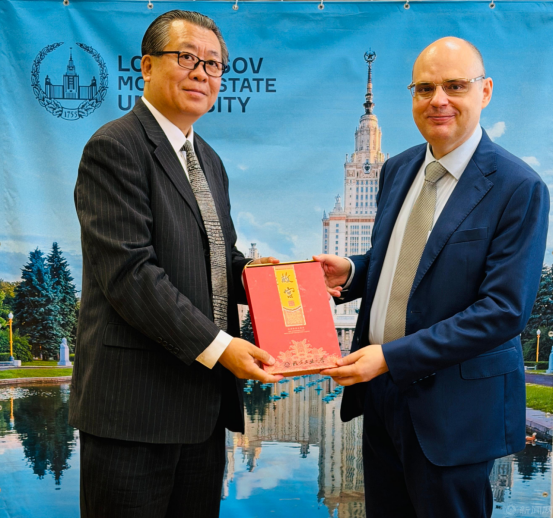
Lomonosov Moscow State University, formerly known as Moscow Imperial University, is the largest and oldest comprehensive research university in the Russian Federation. It is a leading center of education, science, and culture in Russia and is widely recognized internationally. The university is a member of the International Forum of Public Universities, the Alliance of Universities in European Capitals, and the European University Association. As Russia’s largest center for teaching, research, and culture, it has 39 faculties and departments. To date, the university has produced 13 Nobel Prize laureates, six Fields Medal winners, 168 academicians of the Russian Academy of Sciences, and 8,800 doctoral degree holders. In the 2025 QS World University Rankings, Lomonosov Moscow State University was ranked 94th globally and first in Russia.
NCUT Russian Alumni Association Established in Moscow
On June 20, the founding ceremony of the NCUT Russian Alumni Association was held in Moscow. Alumni from across Russia gathered to celebrate NCUT’s 80th anniversary and establish an important platform for communication between the University and its alumni in Russia. At the ceremony, President Zhang Lifeng officially appointed alumna Maria as Honorary President of the NCUT Russian Alumni Association. Maria said she would fulfill her responsibilities and support the long-term operation of the association and inter-university exchanges between China and Russia. The event was marked by a strong sense of warmth and connection. Alumnus Gupu drove 1,000 kilometers to attend the ceremony, deeply moving the faculty members present. In the future, the Russian Alumni Association will continue to bring together NCUT alumni in Russia, organize networking and professional exchange activities on a regular basis, promote mutual support among alumni, and serve as a bridge for deepening educational exchange and research cooperation between NCUT and Russian partners. It will also further expand the University’s overseas alumni network and support the development of international education.