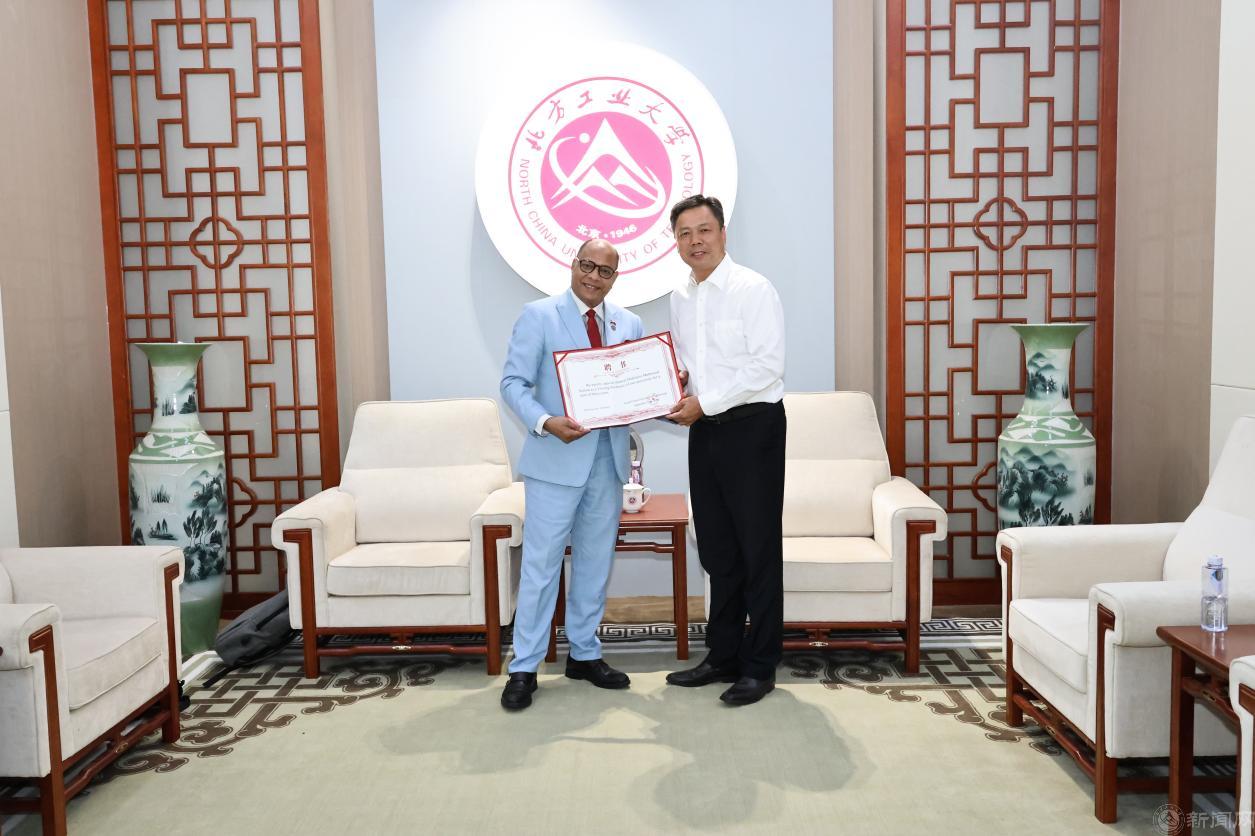
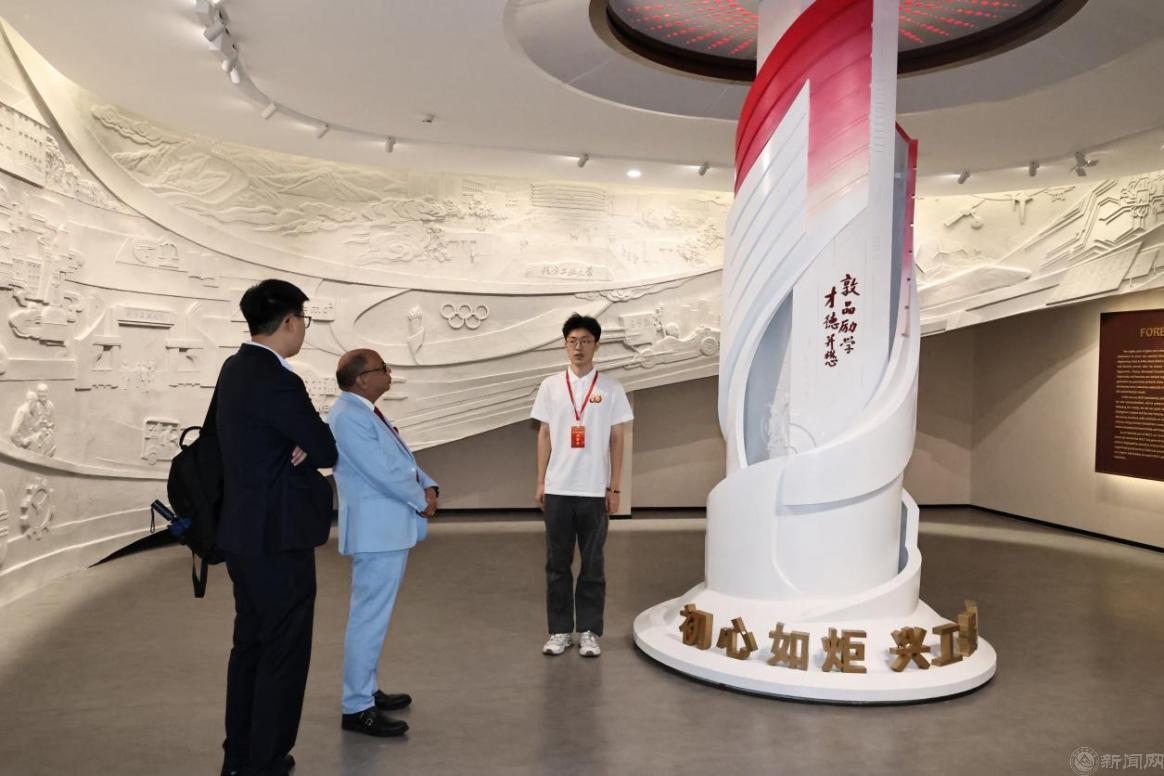
On September 17, NCUT held the third event of its 2026 Global Experts Lecture Series. Ahmed Salam, an Expert Advisor to Egypt's State Information Service and a veteran specialist on China, delivered a lecture titled "China-Egypt Media Cooperation and Dialogue among Civilizations under the Framework of the Belt and Road Initiative." Zhang Qihong, Secretary of the NCUT Committee, met with Salam and his delegation at the University History Museum and presented him with a certificate appointing him as a guest professor of NCUT. Chen Qun, Vice President of NCUT, attended the meeting and moderated the lecture.
Zhang Qihong welcomed Salam to NCUT. He noted that 2026 marks the 70th anniversary of diplomatic relations between China and Egypt, and that the meeting between the two heads of state in September had given fresh momentum to bilateral relations, particularly in people-to-people exchanges and educational cooperation. This year also marks NCUT's 80th anniversary. Since its founding, the University has educated more than 130,000 graduates and made important contributions to Beijing's industrial development. Zhang thanked Salam for helping NCUT establish links with leading Egyptian universities and expressed the University's commitment to deeper practical cooperation with Egyptian universities, research institutes, and industry organizations, as well as stronger youth exchanges and mutual learning between the two civilizations.
Salam thanked NCUT for the invitation. He said President Xi Jinping's friendly visit to Egypt earlier this month had received an enthusiastic response from the Egyptian government and society and was of great importance to carrying forward the traditional friendship and expanding cooperation across different fields. Drawing on his extensive work in China-Egypt media exchanges and international relations, he said he had witnessed the continued development of the China-Egypt comprehensive strategic partnership. Honored to become a guest professor of NCUT, Salam pledged to help the University build connections with Egyptian universities, government departments, and research institutions and to serve as a bridge between the two countries.
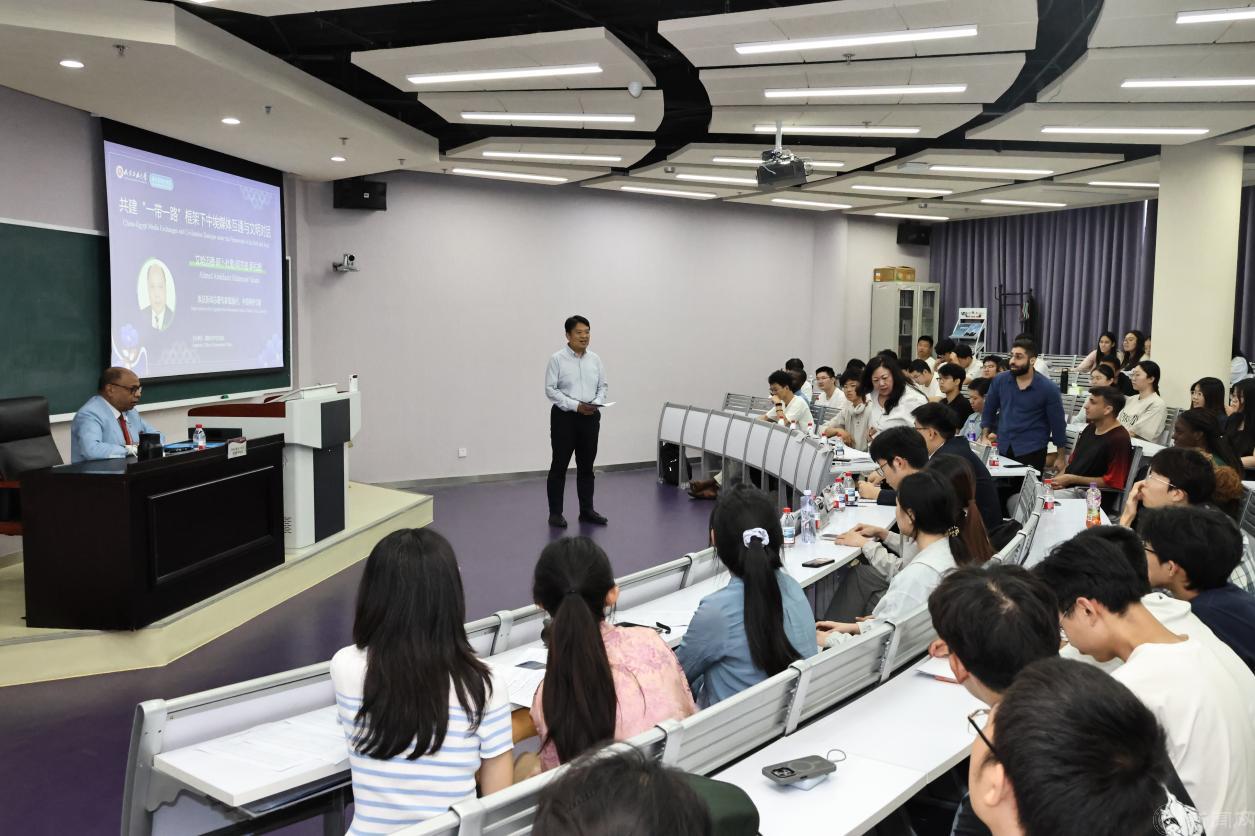
In his lecture, Salam reviewed the progress and achievements of China-Egypt cooperation since the establishment of diplomatic relations in 1956. He argued that friendship between countries rests not only on political and economic interests but also on mutual understanding between their peoples. The media, he said, should move beyond one-sided narratives, present a balanced and multidimensional picture of both countries, and serve as a bridge between them. He noted that the Belt and Road Initiative carries forward the spirit of the ancient Silk Road and that people-to-people and cultural exchanges are as important as infrastructure development. As two ancient civilizations, China and Egypt should respect diversity and learn from each other through dialogue. Salam called for wider cooperation in student exchanges, language education, joint research, and media collaboration. He also encouraged young people in both countries to engage with one another and help make media, education, and culture important links along the Silk Road in the new era.
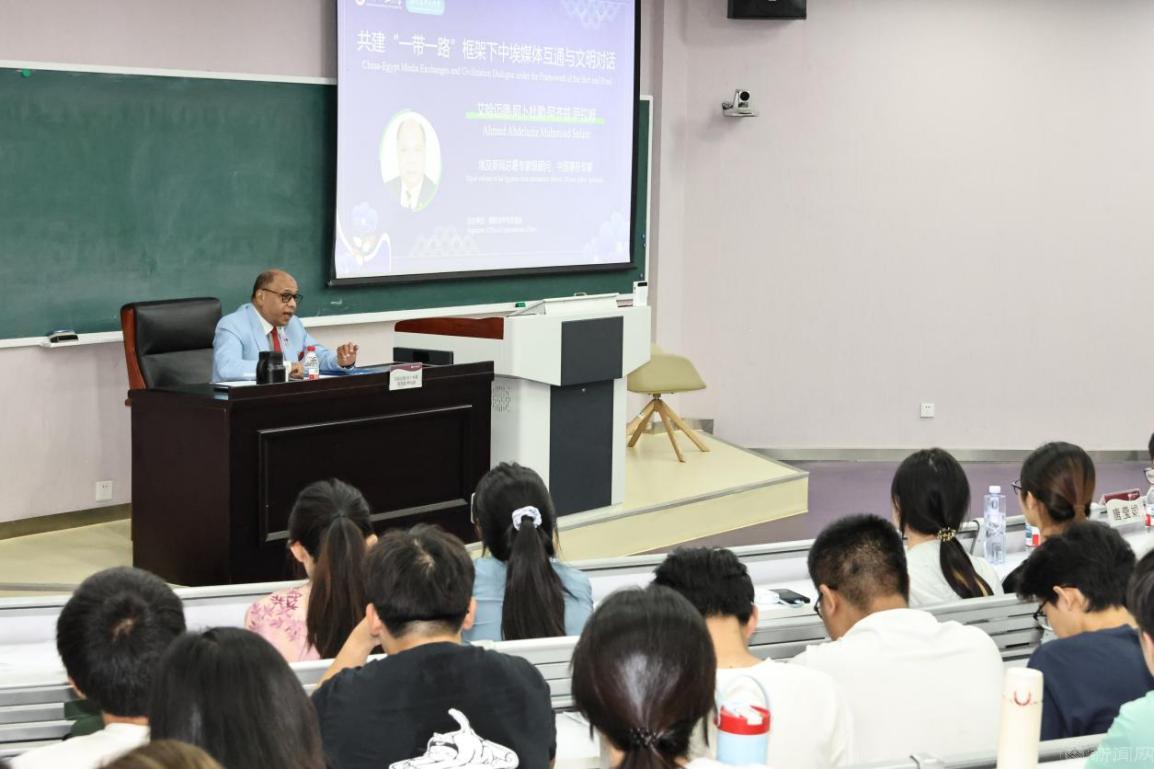
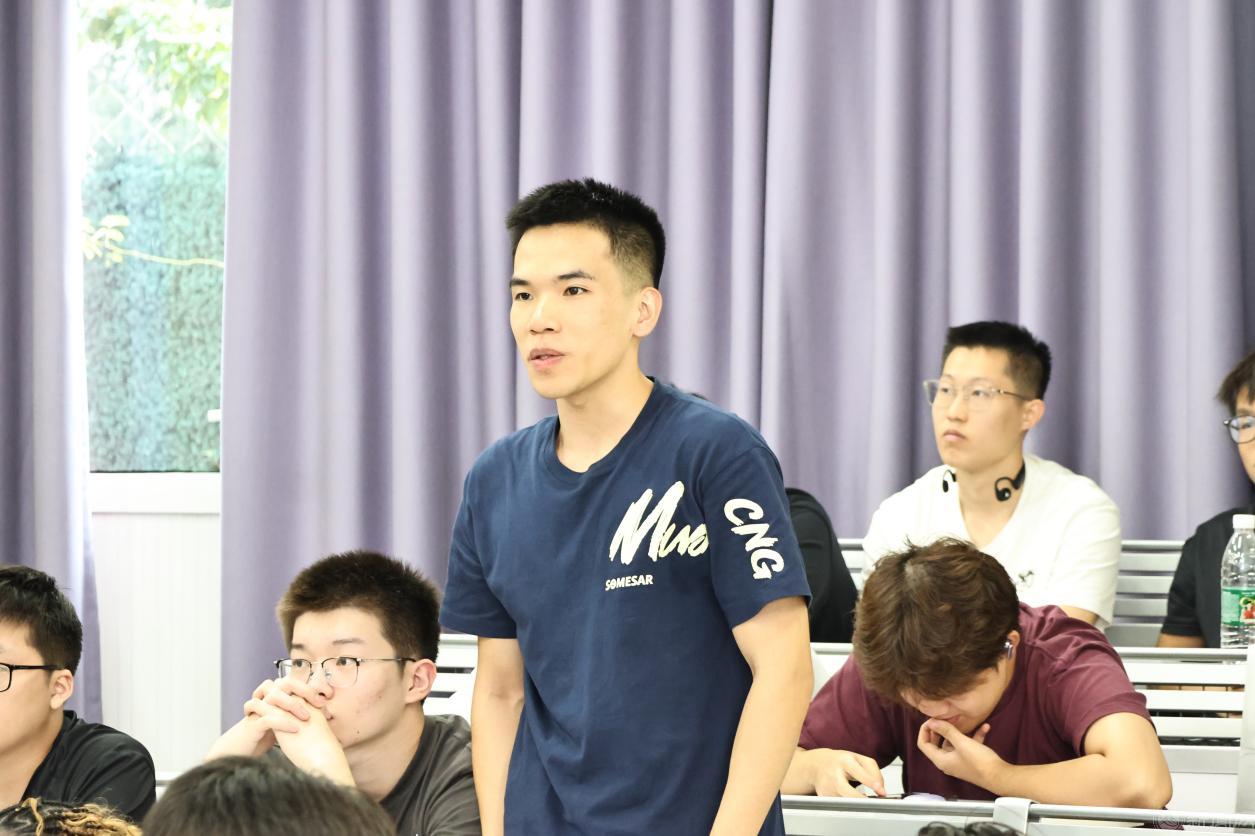
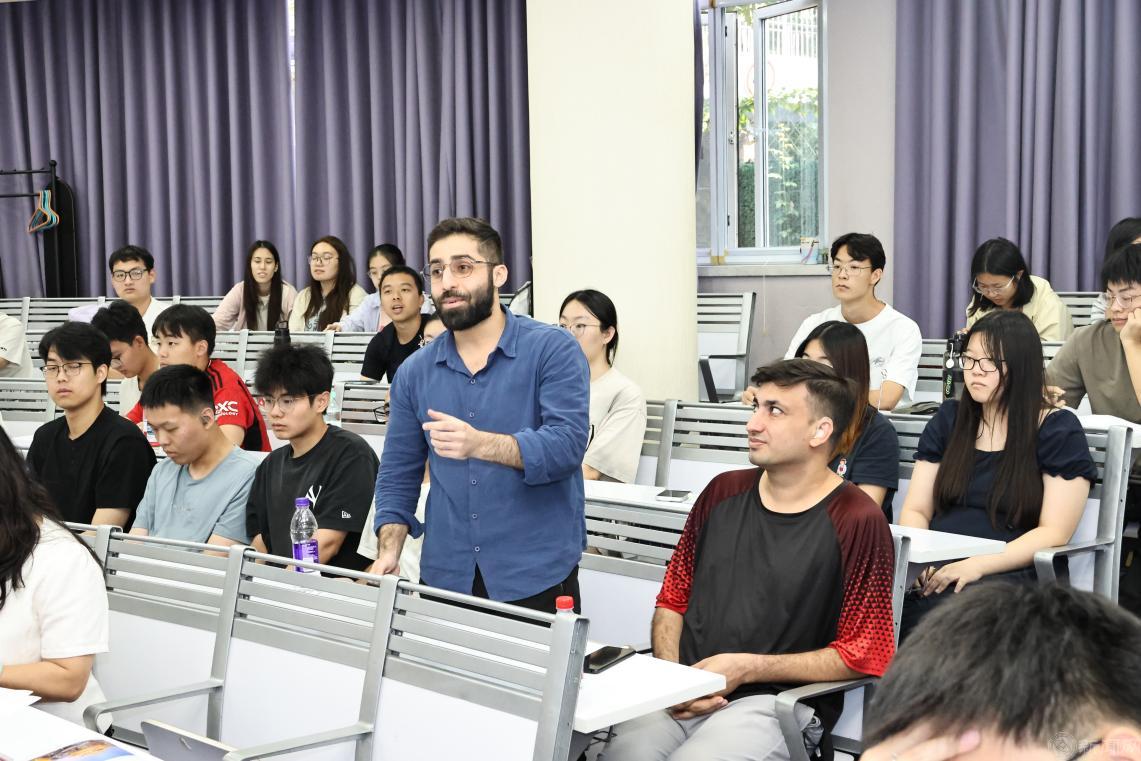
The lecture was organized by the Office of International Affairs and attended by nearly 100 faculty members and students from across the University. During the Q&A session, students raised questions about how young Egyptians view China, issues of shared interest to young people in Chinese and Egyptian media, and cultural identity in the context of globalization. Salam responded to each question and engaged in a lively discussion with the audience.
After the lecture, Salam visited the University History Museum, where he learned more about NCUT's 80-year history, educational strengths, and recent achievements in talent development, scientific research, and international cooperation.
Ahmed Salam is an Expert Advisor to Egypt's State Information Service and a specialist on China. Formerly Deputy Head of the State Information Service and Press Counsellor at the Egyptian Embassy in China, he lived and worked in China for many years and closely observed its economic and social transformation. Back in Egypt, he promoted Chinese-Egyptian media dialogue, wrote for major Egyptian outlets, and gave interviews to People's Daily Online, CCTV.com, and Guangming Daily.