As part of the University’s efforts to support the Belt and Road education initiative, expand international cooperation, and enhance its global engagement, Zhang Lifeng, President of NCUT, led a delegation to Serbia from June 16 to 18. During the visit, the delegation signed a Memorandum of Understanding with the University of Belgrade and delivered a special academic lecture.
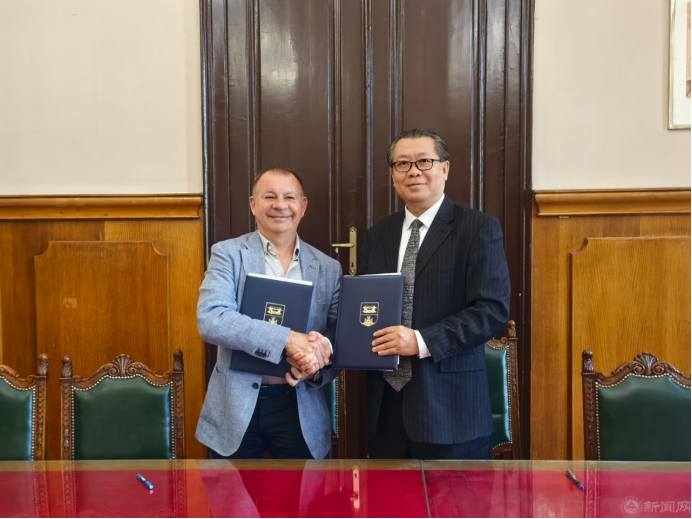
The NCUT delegation was warmly received by Nebojsa Bojovic, Vice Rector for International Affairs of the University of Belgrade, and Branka Janda-Markovic, Head of its International Office. The two universities signed a Memorandum of Understanding, formally establishing a friendly cooperative relationship. During the meeting, both sides introduced their educational profiles, disciplinary strengths, research development, and internationalization efforts. Vice Rector Nebojsa Bojovic spoke highly of NCUT’s research achievements and academic strengths in areas such as clean production of high-quality specialty steel, new metallurgical processes, green metallurgy, and advanced metallic materials. Zhang Lifeng said that the visit, building on the University of Belgrade’s strengths in metallurgy and materials, focused on frontier areas including green metallurgy, intelligent manufacturing, and new materials, with the aim of jointly developing research platforms, addressing key technological challenges, and cultivating internationally minded interdisciplinary talent.
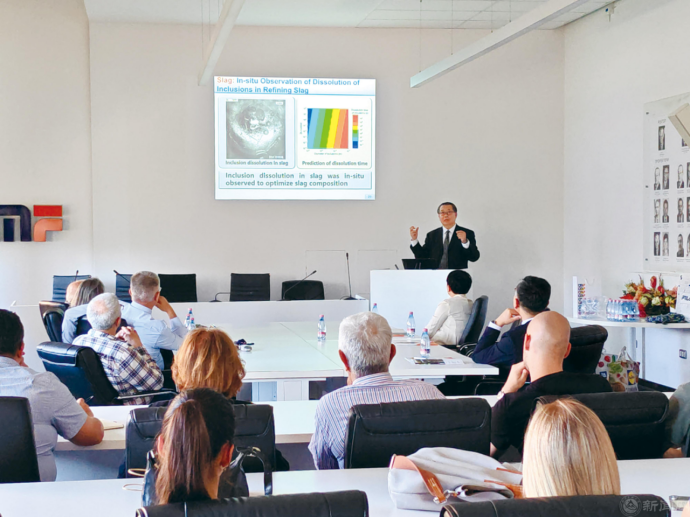
During the visit, at the invitation of the Faculty of Technology and Metallurgy, University of Belgrade, Zhang Lifeng delivered an academic lecture titled “Precise Control of Non-Metallic Inclusions in High-Quality Steel” to doctoral students and faculty members. The lecture was chaired by Professor Nenad Radović. Drawing on more than 30 years of research experience in metallurgy, Zhang discussed the global trend of low-carbon transformation in the steel industry and systematically explained the formation mechanisms, sources, control methods, and prediction models of non-metallic inclusions in high-quality steel. He noted that the production of high-quality steel requires systematic control of the composition, quantity, size, and distribution of inclusions, with a focus on steel cleanliness, precise composition control, and microstructure homogenization. He also analyzed the effects of alloy addition, refining slag reactions, and refractory erosion on the evolution of inclusions in steel. The lecture combined theoretical depth with engineering relevance and offered a systematic approach to clean steelmaking and precise inclusion control.
A Q&A session was held at the end of the lecture. Faculty members and students raised questions on topics such as the transfer and application of academic research outcomes in industry. Zhang Lifeng responded in detail and offered professional suggestions based on both academic theory and industrial practice. Participants said the lecture was both academically rigorous and closely connected to industry needs. It broadened their research perspectives, deepened their understanding of China-Serbia cooperation in metallurgy, and strengthened their interest in future joint study, research projects, and academic exchanges between the two universities.
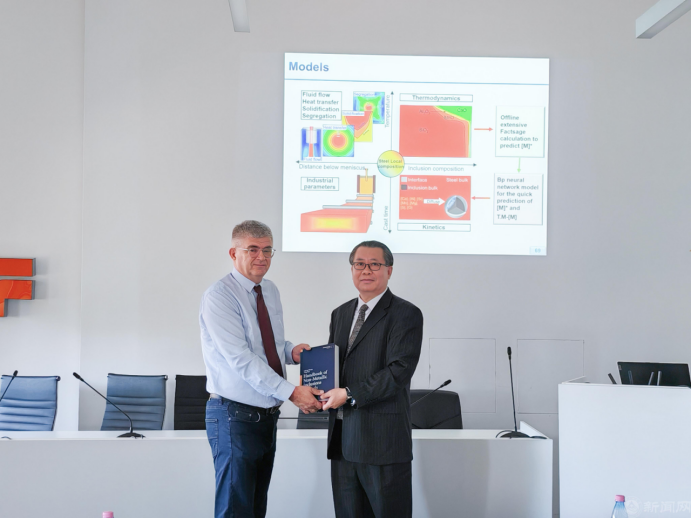
After the lecture, the two sides held further discussions on the development of the China-Serbia Belt and Road Joint Laboratory for Green Steel Manufacturing, as well as academic exchange and student mobility. Zhang Lifeng presented his academic works to Professor Nenad Radović and the Faculty of Technology and Metallurgy, laying a solid foundation for future cooperation.
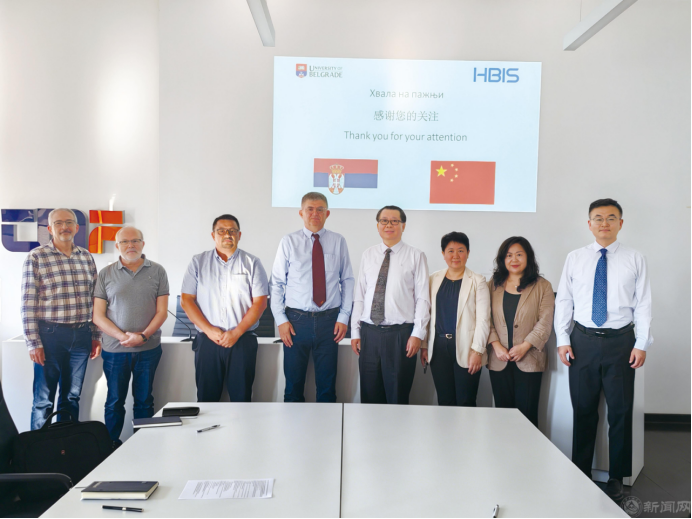
The University of Belgrade, located in Belgrade, is the oldest and one of the most important higher education institutions in Serbia, as well as one of the largest universities in the Balkans. Founded on September 13, 1808, it has a history of more than 200 years. The university comprises 33 faculties and 8 institutes, with approximately 5,000 faculty members and 70,000 students. Its Faculty of Technology and Metallurgy is a leading teaching and research platform in the Balkans in metallurgical engineering, advanced metallic materials, and steelmaking. With long-standing strengths in ferrous metallurgy, non-ferrous metallurgy, metallic materials preparation, and low-carbon industrial smelting, the faculty has maintained long-term industry-university-research cooperation with HBIS Serbia. Its strong regional influence and research directions are highly aligned with NCUT’s materials discipline. In 2025, HBIS Group and the University of Belgrade jointly established and began operating the China-Serbia Belt and Road Joint Laboratory for Green Steel Manufacturing.