From July 6 to 9, Chen Jiaqing, Vice President of NCUT, led a delegation to TU Berlin, TU Bergakademie Freiberg, and RWTH Aachen University. The delegation signed cooperation agreements and held a series of meetings to expand international education and advance practical cooperation with the three institutions.
Visit to TU Berlin
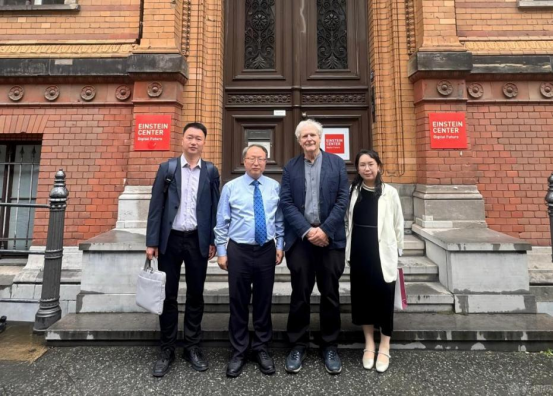
On July 6, the delegation visited TU Berlin. Chen Jiaqing held talks with Professor Raoul Bunschoten of TU Berlin’s Faculty of Planning, Building and Environment and Professor Hans-Liudger Dienel, head of the Sustainable Mobility Management MBA program. The two sides reviewed the history of exchanges between the universities and shared recent developments in academic programs, talent cultivation, and international education. They agreed to expand student exchanges in engineering and launch exchange and short-term programs related to the Sustainable Mobility Management MBA.
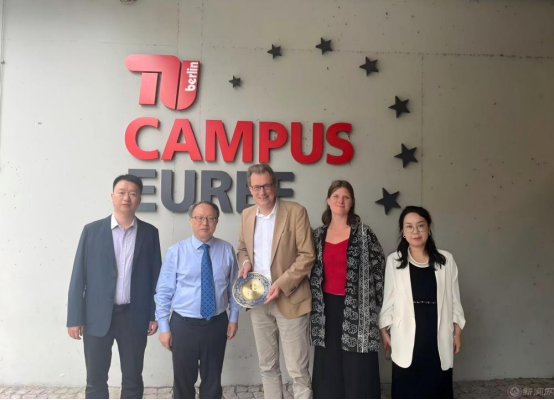
The delegation also visited architecture teaching laboratories, the Einstein Center Digital Future (ECDF), and the EUREF-Campus.
Founded in 1770, TU Berlin is a member of TU9 and one of Germany’s 11 Universities of Excellence. It is also one of the 6 German members of the Partnership of a European Group of Aeronautics and Space Universities (PEGASUS), as well as one of Germany’s oldest universities of technology. TU Berlin is ranked 145th overall in the QS World University Rankings and 24th globally for Architecture.
Visit to TU Bergakademie Freiberg
On July 7, the delegation visited TU Bergakademie Freiberg. Chen Jiaqing held talks with Rector Jutta Emes and Professor Olena Volkova, head of the Faculty of Materials Science and Technology and the Institute of Iron and Steel Technology. The two sides introduced their education and research, disciplinary strengths, and international development. Professor Volkova recalled her many years of research exchanges with NCUT President Zhang Lifeng and thanked the delegation for presenting an English-language academic monograph by Zhang. She expressed hope that metallurgy and materials science would serve as a starting point for regular research cooperation and academic exchange, while supporting NCUT’s efforts to engage overseas experts.
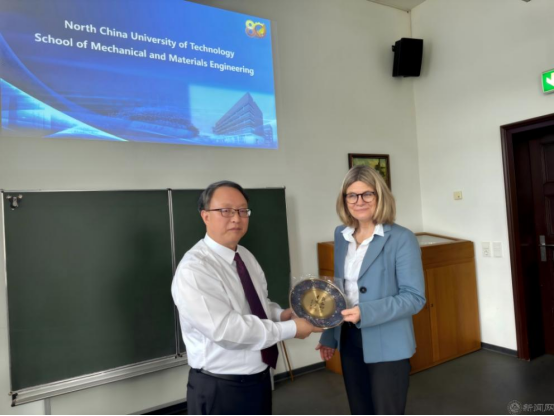
The delegation visited laboratories for alloy melting, heat treatment, metallographic analysis, and thermophysical property testing at the Institute of Iron and Steel Technology. They learned about instruments and facilities covering the full process from ironmaking and steelmaking to solidification, heat treatment, and powder metallurgy, gaining a deeper understanding of the University’s longstanding academic foundation and strong research capacity in steel materials.
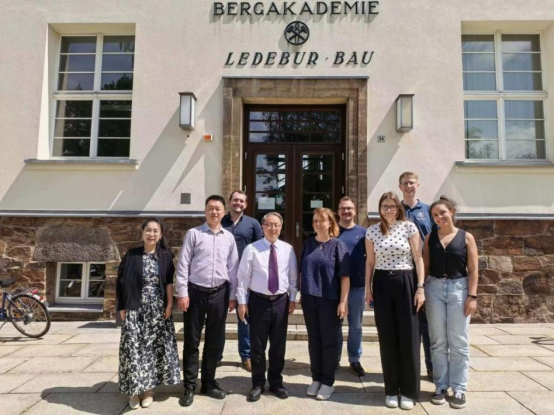
Located in Saxony, TU Bergakademie Freiberg was founded in 1765 and is one of the world’s oldest public universities specializing in mining and technology. It is ranked 487th overall in the QS World University Rankings and 22nd globally for Mineral and Mining Engineering. The chemical elements indium and germanium were discovered at the University. Its major strengths include geology and mining, materials science, energy and the environment, mechanical engineering, and resource economics.
Visit to RWTH Aachen University
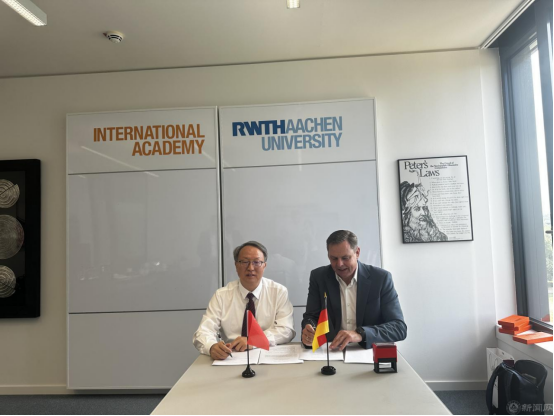
On the afternoon of July 8, the delegation visited RWTH Aachen University. Chen Jiaqing held talks with Professor Bernd Markert, representing the Rector of RWTH Aachen University, and Dr Helmut Dinger, Managing Director of RWTH International Academy. The two sides introduced their education and research, disciplinary strengths, and international development. They finalized implementation plans for “3+1+2” and “4+2” joint bachelor’s-master’s pathways in materials science, mechanical engineering, electrical engineering, energy, and civil engineering, and signed a Memorandum of Understanding on the programs.
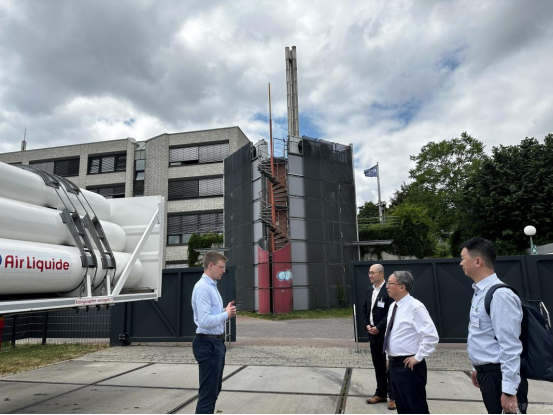
The delegation also toured the research platforms of RWTH Aachen University’s institute for energy and powertrain systems. Building on its traditional strengths in internal combustion engines, the institute has expanded its research in response to Europe’s green and low-carbon energy transition. Its research now covers hydrogen combustion engines, fuel cells, hybrid systems, digital engineering, lightweight materials, and the circular remanufacturing of components. The institute integrates fundamental research, test-bench validation, and industrial application, and works closely with leading companies including FEV, Bosch, and Volkswagen. It is one of Europe’s leading research platforms in powertrain technologies.
Founded in 1870, RWTH Aachen University is one of Germany’s leading public research universities of technology. It is a member of TU9, one of Germany’s 11 Universities of Excellence, and a core member of the IDEA League. Ranked 105th overall in the QS World University Rankings, the University is particularly strong in mechanical engineering, electrical engineering, computer science, materials science, and civil engineering. More than 350 corporate R&D centers involving companies such as Siemens, Porsche, and FEV have been established on campus.
The visit produced several important outcomes. It strengthened NCUT’s long-standing, multi-level student exchanges with TU Berlin and opened new opportunities in business education and international talent engagement. NCUT formally established an institutional partnership with RWTH Aachen University and advanced joint bachelor’s-master’s programs across multiple disciplines. The University also reached agreement with TU Bergakademie Freiberg on deeper cooperation in metallurgy and materials science. Moving forward, NCUT will accelerate the implementation of the agreements through joint education, collaborative research, international talent engagement, and two-way student mobility, further enhancing its international education and supporting the University’s high-quality development.